
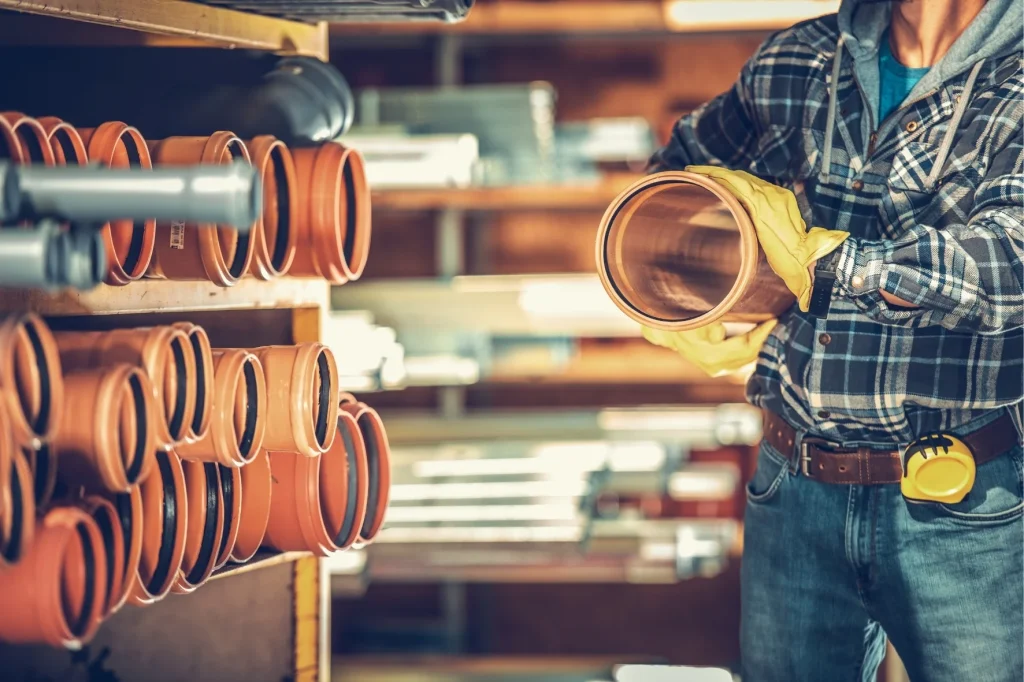
Pipe Types We Work With in PG County & Montgomery County
Not all pipes are created equal — and not all pipe problems have the same solution. The type of pipe running beneath your property has a direct impact on how it fails, what warning signs to watch for, and which trenchless repair method is most appropriate.
Why Pipe Material Matters
The aging sewer infrastructure throughout PG County and Montgomery County represents decades of different construction eras and materials — cast iron from mid-century residential builds, vitrified clay from even earlier installations, Orangeburg pipe from the post-war housing boom, and more. Each material ages differently, fails differently, and responds to trenchless repair differently.
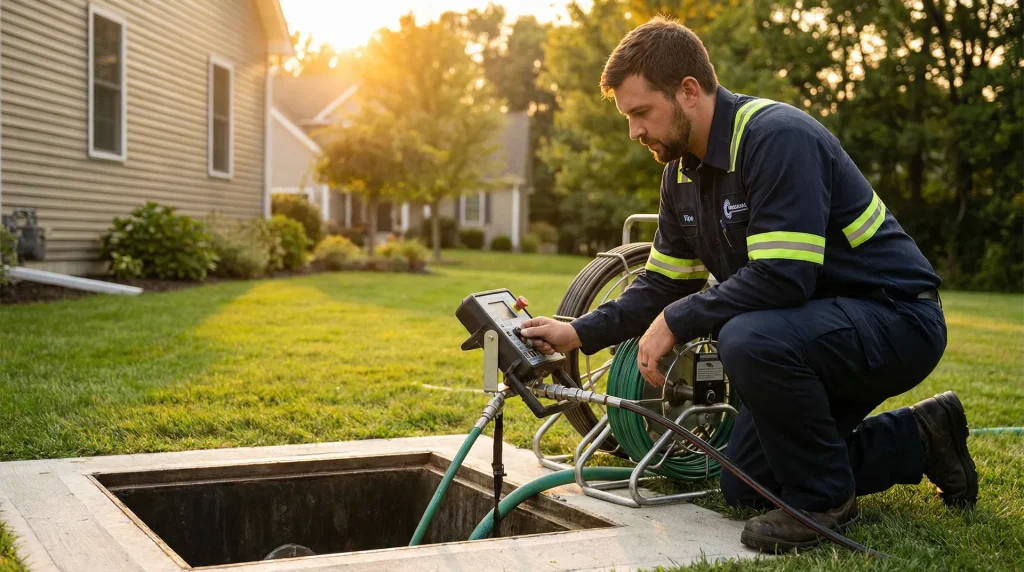
Understanding what your pipes are made of is the first step toward choosing the right repair approach. Our CCTV sewer camera inspections identify pipe material, condition, and the nature of any damage — giving us everything we need to recommend the most effective, cost-efficient solution.
Cast Iron Sewer Pipe Repair
Cast iron was the dominant pipe material for residential and commercial sewer systems from the early 1900s through the 1970s. It’s strong, heavy, and was built to last — but "built to last" has a limit. After 50 to 80 years of service, cast iron pipes throughout PG County and Montgomery County are reaching the end of their designed lifespan, and the signs of deterioration are becoming impossible to ignore.
How Cast Iron Fails
Cast iron corrodes from the inside out. Hydrogen sulfide gases produced by wastewater react with the pipe interior to form sulfuric acid, which gradually eats away the pipe walls. Over time, this produces pitting, flaking, and eventually structural failure. Root intrusion through deteriorating joints accelerates the process. The result is a pipe with thin, weakened walls prone to cracking, scale buildup that restricts flow, and joints that no longer seal properly.
Signs Your Cast Iron Pipe Is Failing
Our Trenchless Solution
CIPP lining is the ideal solution for deteriorating cast iron. We insert a resin-saturated liner directly into the existing cast iron pipe and cure it in place — creating a smooth, corrosion-resistant new pipe inside the old one, without removing the cast iron shell. For cast iron that has experienced more significant structural failure, pipe bursting replaces the old line entirely with a new HDPE pipe.
Ductile Iron Pipe Lining & Repair
Ductile iron pipe is an evolution of cast iron — introduced in the 1950s and widely used through the 1970s and beyond for water mains, force mains, and larger diameter sewer applications. It’s stronger and more flexible than traditional cast iron, but it is not immune to corrosion, joint deterioration, and the effects of aging infrastructure.
How Ductile Iron Fails
Like cast iron, ductile iron is susceptible to internal corrosion from hydrogen sulfide and external corrosion from aggressive soils. Graphitization — where the iron corrodes but leaves a brittle graphite shell that appears intact — is a particular risk with older ductile iron. Joints can also deteriorate over time, allowing infiltration or exfiltration.
Common Applications in This Region
Ductile iron is more common in municipal water mains, commercial applications, and larger diameter sewer infrastructure than in typical residential drain lines. Properties with older municipal connections or commercial buildings with larger pipe runs are most likely to have ductile iron components.
Our Trenchless Solution
CIPP lining is well-suited for ductile iron rehabilitation, providing a new structural interior that addresses both corrosion and joint deterioration. For sections requiring full replacement, pipe bursting is an effective approach depending on pipe diameter and site conditions.
HDPE Pipe Repair & Services
High-density polyethylene (HDPE) pipe is the modern standard for trenchless sewer replacement — and the material we install when performing pipe bursting. It’s the newest major pipe material in common use, and its performance characteristics make it the best long-term choice for replacement pipe.
Why HDPE Outperforms Older Pipe Materials
When HDPE Repair Is Needed
While HDPE is the most durable pipe material available, it’s not entirely immune to damage. Mechanical damage during installation, improper fusion joints, ground subsidence, or exposure to certain chemicals can cause issues. We inspect HDPE lines using camera equipment and address any issues with targeted repairs or, where necessary, relining.
HDPE as Replacement Pipe
When we perform pipe bursting on cast iron, clay, or Orangeburg lines throughout PG County and Montgomery County, the replacement pipe we install is always HDPE — giving you a pipe that will far outlast whatever it replaces.
Orangeburg Pipe Replacement
If there is one pipe material that requires immediate attention when discovered, it is Orangeburg. Orangeburg pipe — named after Orangeburg, New York, where it was manufactured — is made from layers of ground wood pulp and pitch pressed together and sealed. It was produced cheaply during and after World War II when cast iron was in short supply, and installed in hundreds of thousands of homes across the country between the 1940s and 1970s.
It was never designed to last. And in most cases throughout PG County and Montgomery County, it hasn’t.
How Orangeburg Fails
Orangeburg absorbs moisture over time and softens, deforms, and eventually collapses. Unlike metal pipes that corrode gradually, Orangeburg deteriorates by changing shape — it becomes oval, then flattened, then collapsed. There is no way to reverse this process. A deteriorating Orangeburg pipe cannot be reliably rehabilitated with a liner — the host pipe is too deformed and too structurally compromised to support a lining process.
The only real solution is replacement.
Warning Signs of Orangeburg Pipe Failure
Our Trenchless Solution
Pipe bursting is the most effective method for Orangeburg replacement. The bursting head fractures and displaces the deteriorated Orangeburg material as it pulls a new HDPE pipe into place — a single, efficient operation that replaces the failed pipe completely. Because Orangeburg is soft and degrades easily, it responds well to the bursting process.
If you have Orangeburg pipe and haven’t had it inspected, don’t wait. Schedule a camera inspection to understand the current condition of your line.
Plastic Sewer Pipe Repair
Plastic pipe — primarily PVC (polyvinyl chloride) and ABS (acrylonitrile butadiene styrene) — became the standard for new residential drain, waste, and vent installations from the 1970s onward. Lighter, cheaper, and easier to install than metal or clay pipe, plastic quickly replaced older materials in new construction and renovation projects.
How Plastic Pipe Fails
Plastic pipe is durable but not indestructible. Common failure modes include:
Our Trenchless Solution
For plastic pipe with cracked sections or joint issues, CIPP lining is an effective repair option. Epoxy coating can address minor internal surface issues. For pipes with significant structural failure or severe joint separation, pipe bursting provides complete replacement. Camera inspection identifies the exact nature and location of the problem before any repair is performed.
Reinforced Concrete Pipe Lining
Reinforced concrete pipe (RCP) is used primarily in larger diameter municipal, stormwater, and commercial sewer applications. It’s a heavy-duty material designed for high-volume flow and structural loads — but it is susceptible to a specific set of deterioration problems that, left unaddressed, can compromise the entire pipe structure.
How Reinforced Concrete Pipe Fails
Our Trenchless Solution
CIPP lining is the industry-standard solution for reinforced concrete pipe rehabilitation. A structural liner installed inside the deteriorated concrete restores the pipe’s internal integrity, seals all joints, and provides a corrosion-resistant surface — extending the service life of the pipe significantly. This is particularly relevant for commercial property owners and municipalities managing aging stormwater and sewer infrastructure in the DC Metro area.
Steel Casing Pipe Services
Steel casing pipe is used in utility construction as a protective sleeve through which carrier pipes — sewer, water, gas, and conduit — are installed using directional boring or pipe jacking methods beneath roads, railways, and other obstacles. While the casing itself is not a sewer pipe, it plays a critical role in protecting the carrier pipe and maintaining the integrity of the crossing.
Steel Casing Considerations
Our Services for Steel Casing
We have experience working with steel casing installations in commercial, municipal, and utility applications throughout the DC Metro area. Our camera inspection capabilities allow us to assess carrier pipe conditions within casings, and we can address carrier pipe issues using appropriate trenchless methods based on the pipe type and access configuration.
Vitrified Clay Pipe Replacement & Lining
Vitrified clay pipe (VCP) is one of the oldest sewer pipe materials still in active service. Used extensively in residential and municipal sewer systems from the late 1800s through the 1960s, clay pipe is actually quite durable in terms of its resistance to chemical corrosion — it doesn’t rust, it doesn’t react with hydrogen sulfide, and the material itself can last for well over a century under ideal conditions.
The problem is the joints.
How Vitrified Clay Pipe Fails
Clay pipe was historically installed in short sections joined with mortar or rubber compression gaskets. Over decades of ground movement, root activity, and soil settlement, these joints open up — and once a joint opens in a clay pipe system, root intrusion follows almost immediately. Roots find the moisture and nutrient-rich sewer environment irresistible, and they exploit every available gap in clay pipe joints aggressively.
Beyond root intrusion, clay pipe is also brittle — it cannot flex with ground movement the way modern plastic pipe can, making it susceptible to cracking and outright breakage under pressure.
Warning Signs of Clay Pipe Problems
Our Trenchless Solution
CIPP lining is highly effective for vitrified clay pipe. The liner spans all the open joints and creates a continuous, seamless interior pipe that eliminates root entry points — addressing the fundamental weakness of clay pipe in a single operation. For sections that are cracked, broken, or heavily root-impacted, pipe bursting provides complete replacement. In either case, your clay pipe problem is resolved without excavating the line.
Not Sure What Pipe You Have? We’ll Find Out.
Most homeowners have no idea what their sewer pipes are made of — and that’s completely normal. Our sewer camera inspection tells us exactly what material your pipe is, what condition it’s in, and what the most appropriate repair approach looks like. From there, we give you a clear, straightforward recommendation.
Trenchless Pipe Repair Throughout PG County & Montgomery County
Whatever your pipe is made of, East Coast Drain and Trenchless Sewer Repair has the experience, equipment, and trenchless solutions to fix it — without digging up your property.
PG County
Montgomery County
Ready to Get Your Pipes Assessed?
Whether you already know what pipe material you have or you’re dealing with symptoms and need answers, we’re here to help. Contact East Coast Drain and Trenchless Sewer Repair today for a camera inspection and free estimate.
Need Pipe Repair in PG County or Montgomery County?
Trenchless solutions for every pipe type — no digging required